Reusable Space Factory REV1 Targets 2030 First Flight
Space Cargo Unlimited plans a first flight in 2030 for REV1, a spacecraft designed to return one ton of payload.
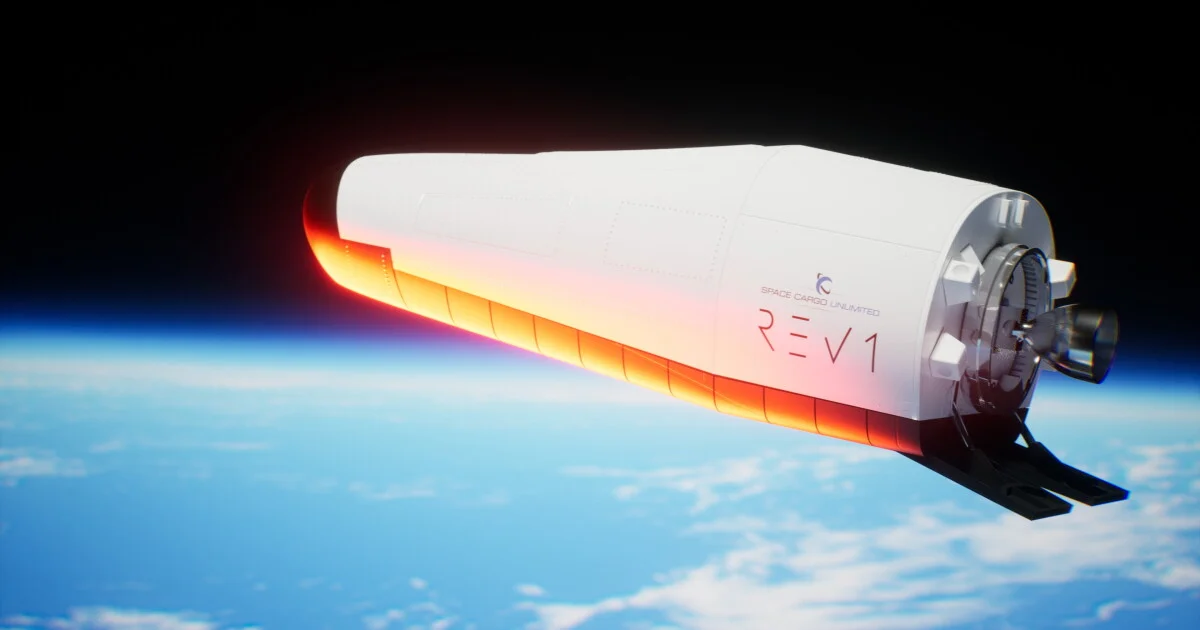
Building a factory in low Earth orbit is difficult not only because of how to build it, but also because of how to bring products back safely. The Luxembourg company Space Cargo Unlimited (SCU) is advancing REV1: a reusable orbital factory and return vehicle combination designed to bring about 1 ton of payload back to Earth, then perform another mission after servicing.
Why send a factory into orbit
The microgravity environment lacks the buoyancy-driven convection and sedimentation found on Earth: hot fluids do not rise naturally, and heavier particles do not readily sink. This creates different conditions for crystal growth and materials preparation, potentially making crystals more uniform and material structures more controllable.
The pharmaceutical company Merck has already conducted validation. In a 2019 paper, researchers reported that crystals of the cancer drug Keytruda (pembrolizumab) grown on the International Space Station were roughly uniform in size, about 39 micrometers, while crystals grown on the ground split into two sizes, about 13 micrometers and 102 micrometers. Merck subsequently used these findings in the laboratory to grow similar crystals.
SCU says that of the more than 150 customers and potential customers it has engaged, about 40% are from the life sciences and biotechnology fields, and the rest are from advanced materials and semiconductors.
REV1: an orbital module plus a return module
SCU displayed a full-scale development model of REV1 at Space Tech Expo Europe in Bremen, Germany. The vehicle is being developed by SCU in collaboration with Thales Alenia Space and is designed to provide about 42 cubic feet (1,200 liters) of pressurized space, 2.5 kilowatts of shared continuous power, and mission durations ranging from several weeks to six months.
SCU Chief Technology Officer Achim Schwarzwälder said the entire REV1 vehicle weighs about 8,160 pounds (3.7 tons) and is expected to fly about 20 times.
REV1 consists of two parts: the orbital module remains in orbit to provide power and services; the return module is responsible for bringing the payload back to the ground, after which it is recovered, refurbished, and flown again.
SCU says the hardware displayed in Bremen will help engineers develop the vehicle's active thermal control system. Thales Alenia Space is already manufacturing the relevant mechanisms for integrating SCU's payload system into the vehicle structure.
BentoBox: a standardized space experiment box
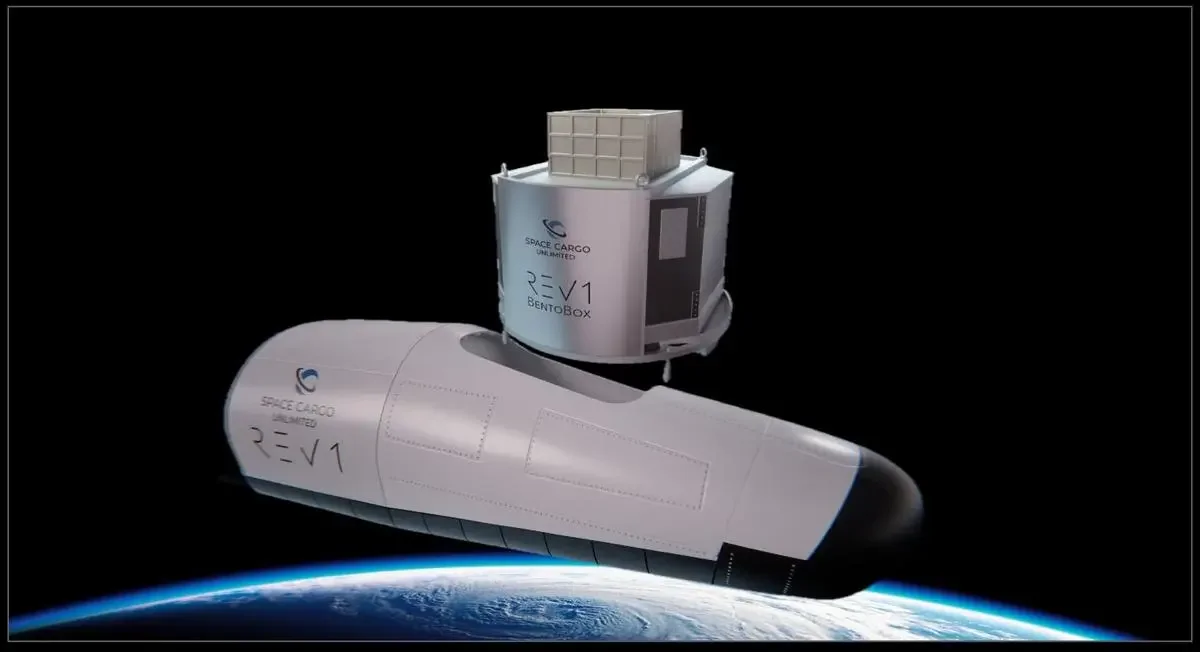
At the core of the factory is SCU's self-developed BentoBox: a standardized, modular box that manages power, data, temperature, and pressure for experiments inside, and is designed to let customers observe and adjust experiments in real time.
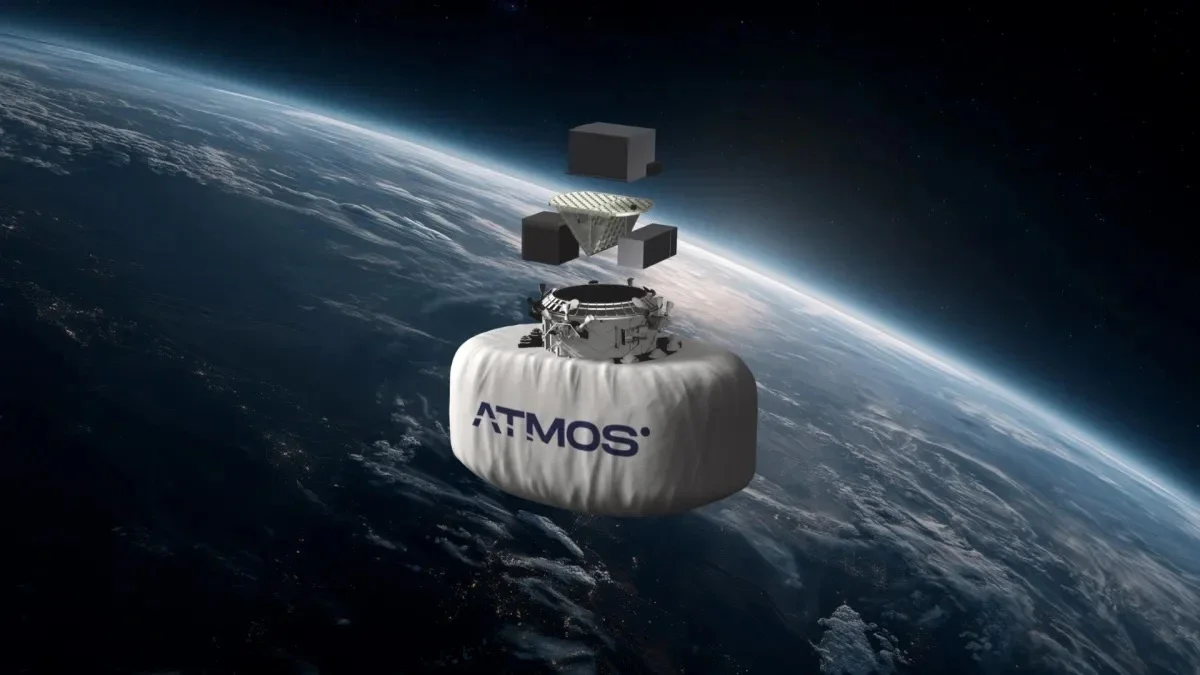
The current version of the BentoBox carries up to 220 pounds (100 kilograms) of payload, has 8.5 cubic feet (240 liters) of internal space, and supplies 100 watts of power. The box is designed to ride on any available vehicle, so it is expected to reach space before REV1. It is planned to first fly on ATMOS's Phoenix 2.1 capsule in 2027; subsequently, a 1-ton-class version is planned to fly as early as 2028 on SpaceX's Starfall return vehicle; after that, it is planned to fly on MaiaSpace's first commercial launch.
The 2030 target and commercial reality
SCU is not the only company trying to build a factory in high altitude. The U.S. company Varda Space Industries launched in 2023 a vehicle that outsiders called the "world's first space factory" and has brought eight return capsules back to Earth. However, these return capsules are small and single-use. REV1 is designed for a larger payload and is planned to carry out up to 20 missions.
But SCU still has a long way to go. In 2022, SCU said REV1 would begin operations by the end of 2025; the target has now changed to flight readiness by 2030, and the company emphasizes that this still depends on development and qualification milestones. The company has not yet selected a launch rocket, and how REV1 will land remains unclear, although its website mentions runway landing.
The space manufacturing market itself has not yet truly taken off. Varda's Eric Lasker told Aerospace America last year: he could say with great confidence that there is currently no product made in space and returned to the ground that you or I could buy.
To date, SCU has raised 40 million euros, and the company has not shied away from this reality. CEO Nicolas Gaume said their goal is to bring space closer to industry and ultimately create value for their customers' customers; they know how difficult this is, and they are advancing with humility and determination.
Source: Space Cargo Unlimited / New Atlas


Comments
0 comments