Limestone and Deep Blue Rooms Frame a Paris Jewelry Boutique
Bureau de Change pairs limestone plinths, pink marble and deep blue rooms in its Nikos Koulis boutique.
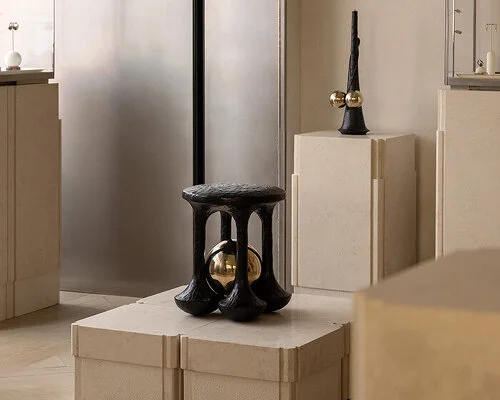
London architecture studio Bureau de Change designed the new Paris store for Greek jeweler Nikos Koulis. Located in an 18th-century building on rue Boissy d'Anglas, the project is the second collaboration between the two parties after the Athens flagship store. The design starts from the architectural history and craft atmosphere of traditional Parisian workshops, bringing together contemporary display furniture, existing architectural details and sculptural materials.
A jewelry workshop in an 18th-century building
The store has two levels. The ground-floor street-facing space uses herringbone wood flooring, chalky plaster walls and natural light to form a soft base tone; limestone-carved display plinths become the main body of the jewelry display. Thin metal frames around the window openings cut into the soft surfaces with sharper geometric lines.
The metal details also draw on elements commonly seen on Paris streets: the decorative edges reference the silhouette of traditional zinc bar counters, creating a subtle connection between the new store and the city's existing interiors.
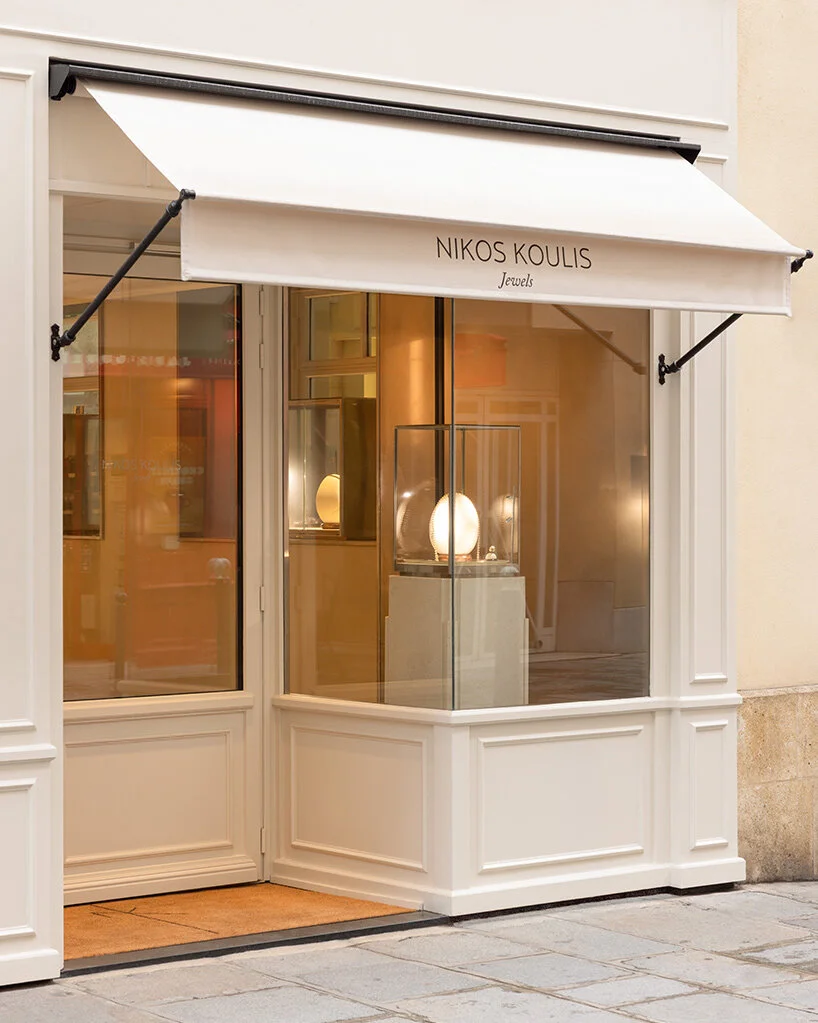
The Nikos Koulis Paris boutique is located in an 18th-century building. Photography © Chloé Le Reste
Sculptural limestone plinths, negative forms from the Athens flagship
The form of the custom display plinths continues from Bureau de Change's earlier design for Koulis's Athens flagship. In the Paris store, the architects superimposed the form of the metal display case bases onto limestone blocks, then "removed" it, leaving negative-form imprints in the stone.
Each stone plinth retains traces of processing: the lower surfaces are rougher, while the upper parts are polished. Glass display cases sit on top of the stone, and faceted metal connectors echo the geometric precision of the jewelry itself.
These plinths are also modular and can be moved or combined to suit different collections and events. Koulis's work is expanding from high jewelry to limited-edition objects and furniture, and this flexibility responds precisely to changing display needs.
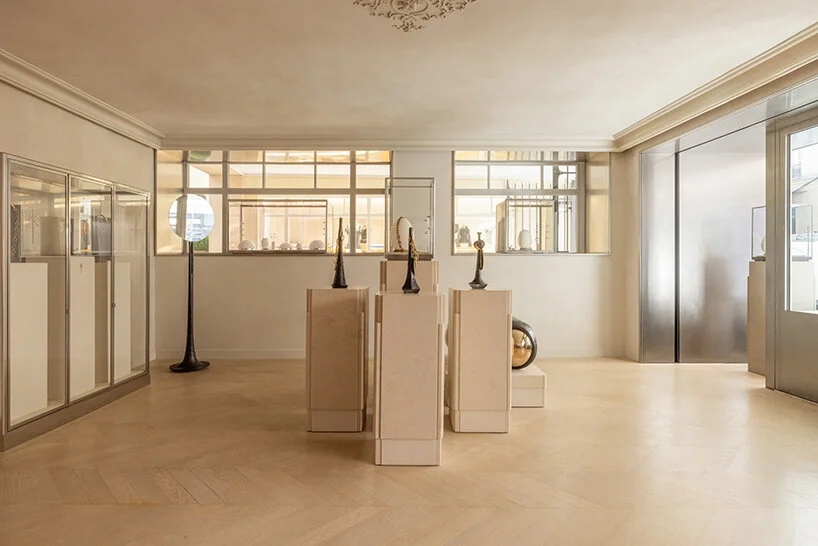
Bureau de Change borrowed the spatial atmosphere of traditional Parisian artist workshops
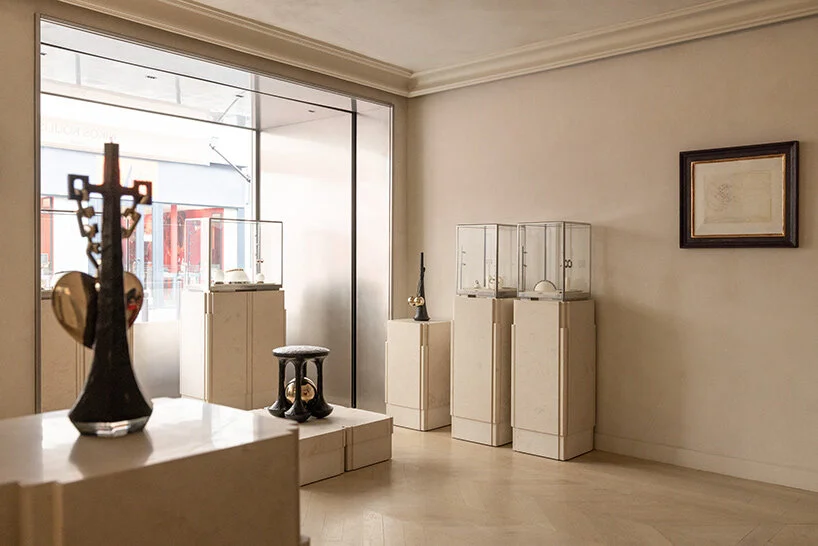
Sculptural limestone plinths display jewelry and objects in the store
Small-scale details in pink marble and stainless steel
Pink marble appears in several small-scale interventions. The entrance door handle is made of chiseled marble, its irregular surface contrasting with the smooth stainless steel around the window casing. The same stone becomes a custom suspended handrail on the staircase, extending along the path to the second floor.
From the street, the storefront frames only part of the interior view; the restrained palette of stone and plaster continues inside, while metal details run through the window casings and display furniture.
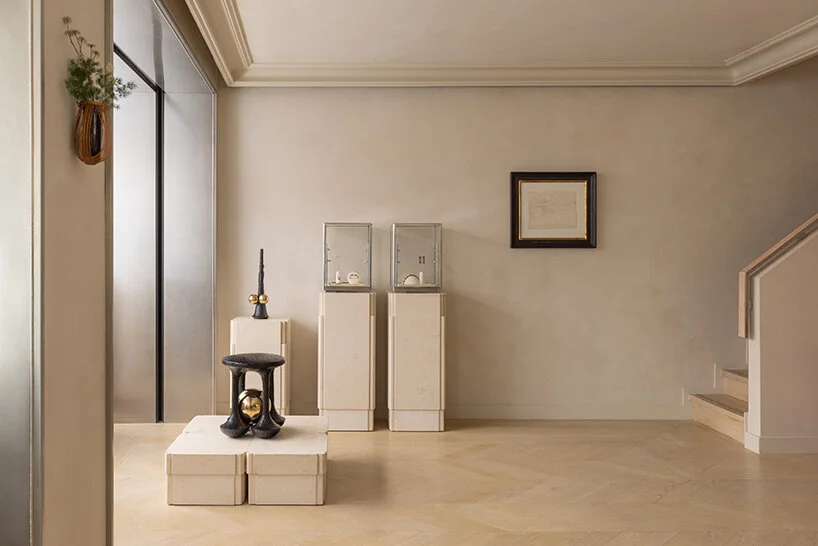
The modular stone plinths continue Bureau de Change's earlier Athens flagship design
The cross-shaped cabinets open into deep blue octagonal rooms
The second floor has a more private apartment atmosphere. Eclectic furniture and artworks from Koulis's personal collection fill the salon, which can be used for individual jewelry meetings as well as dinners and events. Vivid red furniture interrupts the low-saturation palette and echoes the use of color in the Athens store.
Most distinctive are two full-height freestanding cabinets that separate the lounge area from the dining area. Each cabinet has a cross-shaped plan, but opens into an octagonal space. One of them contains eight triangular jewelry display cases arranged around deep blue inner walls, and visitors can step inside.
The other cabinet becomes a bar, with triangular shelves and drawers usable from both sides. When closed, they look like merely large pieces of furniture in the salon; when open, jewelry display and hospitality spaces are folded into their respective geometric forms.
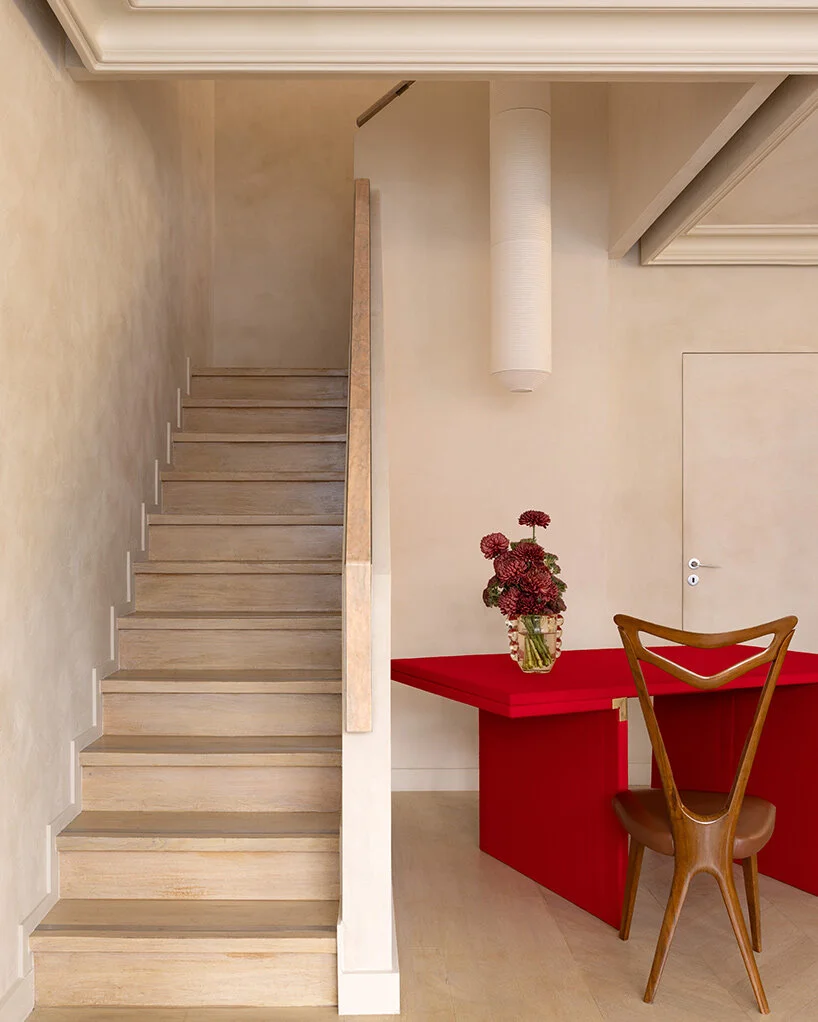
Pink marble details and red furniture introduce color into the interior
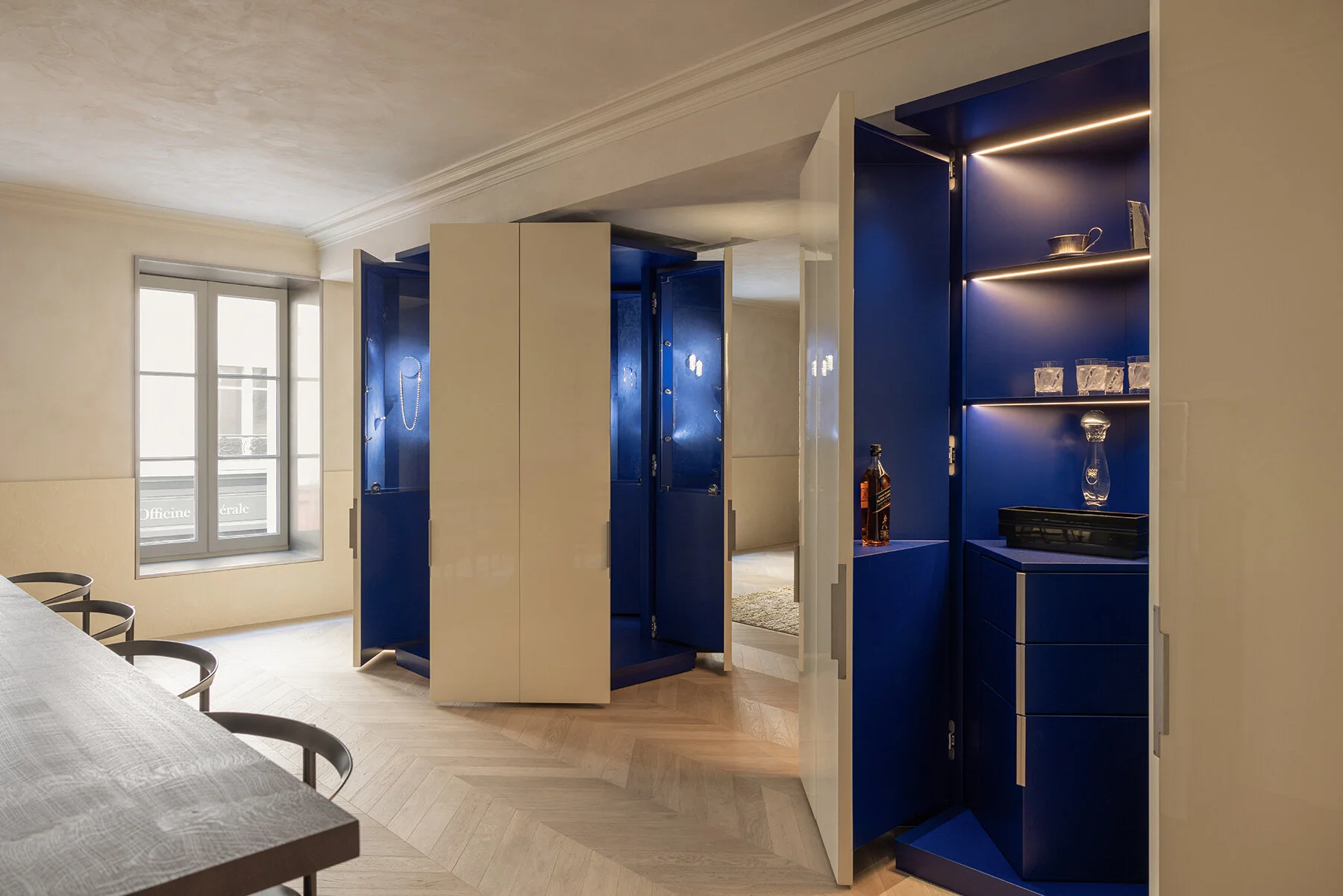
The cross-shaped cabinets open upstairs to reveal deep blue octagonal spaces
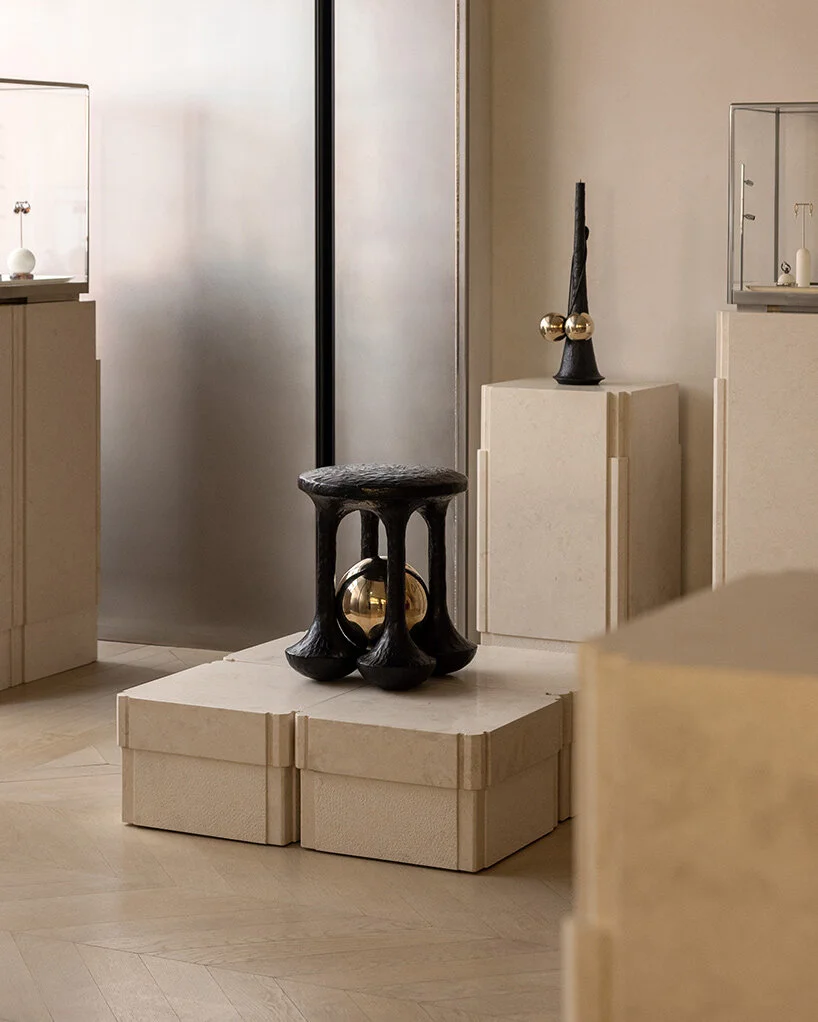
Rough stone contrasts with the smooth surfaces of sculptural objects
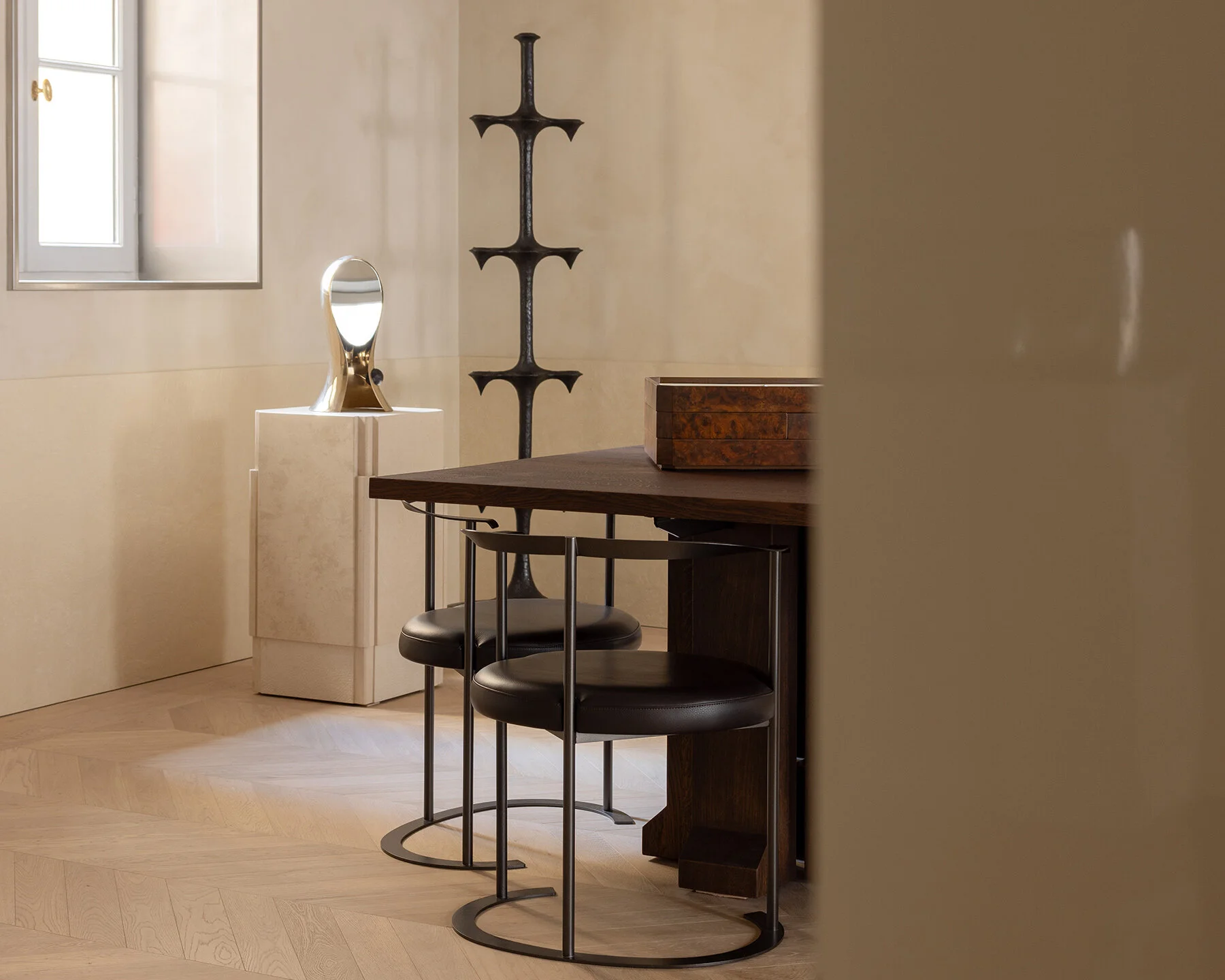
The second-floor salon brings together contemporary furniture and Nikos Koulis's art collection
Project information
| Project | Information |
|---|---|
| Name | Nikos Koulis Paris boutique |
| Design | Bureau de Change |
| Location | 26 rue Boissy d'Anglas, Paris, France |
| Completion | 2026 |
| Photography | Chloé Le Reste |
| Executive architect | PINKS Architecture |
| Lighting design | LUUN |
| Glass display cases | Prugent |
| Stonework | Smili |
| Woodwork | Frugier Sarl |


Comments
0 comments