LiDAR Haptic Glasses for the Visually Impaired
LiDAR glasses relay environmental distance data to vibration motors.
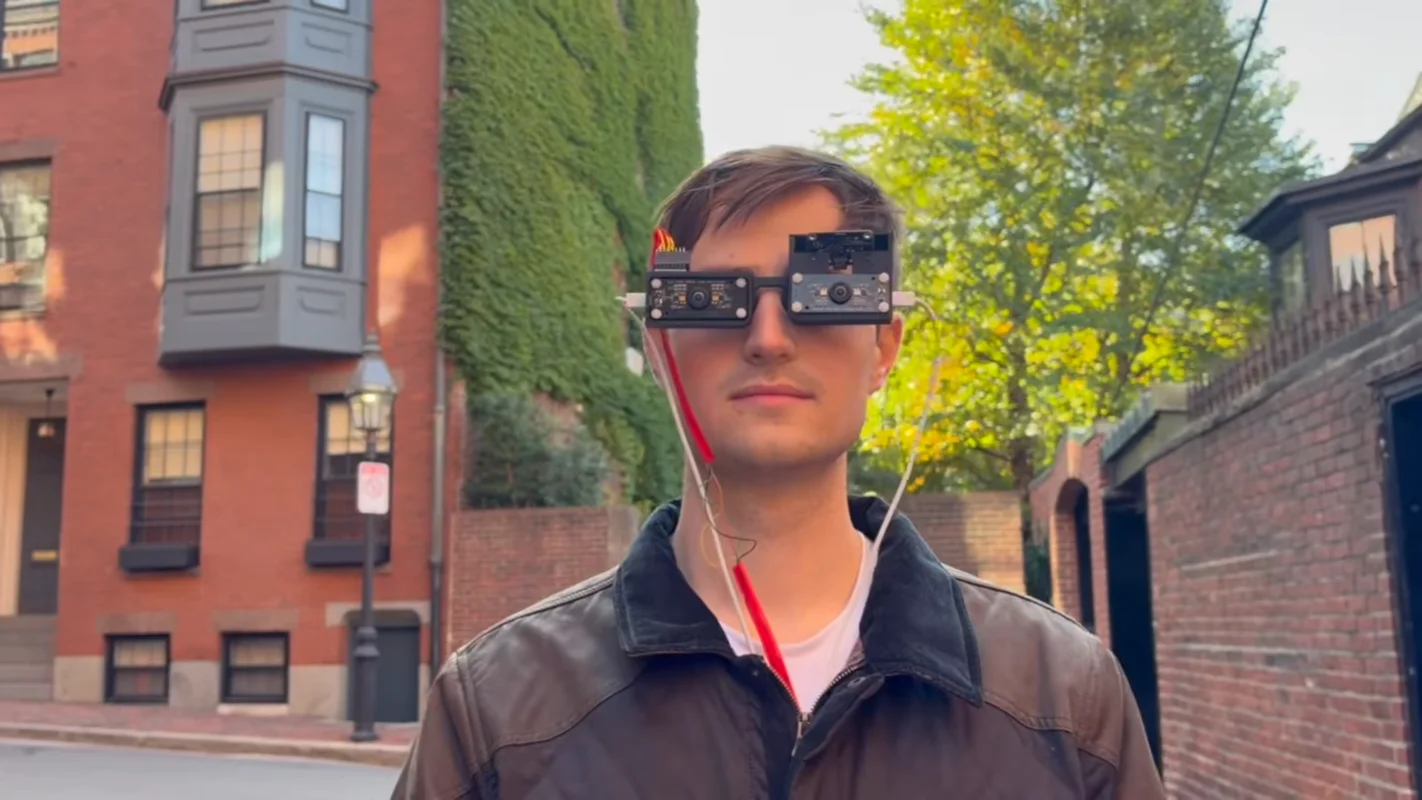
The brain has a rather remarkable ability: it can convert one kind of sensory input into another form. For visually impaired people, this means they can "see" the environment through sound, and after training, the brain even processes sound information into a spatial sense similar to vision. Touch can likewise be mapped to vision. DebackTech recently demonstrated a system that uses vibration motors to help visually impaired people perceive surrounding obstacles.
This phenomenon is called cross-modal plasticity. The system consists of a pair of glasses with built-in LiDAR and a garment sewn with an array of vibration motors. The sensor in the glasses continuously scans the environment and passes distance and direction information to a computer; after processing, the computer immediately outputs the results to the vibration motors on the garment. With practice, users can identify obstacles based on the vibrations of different motors.
Real-world performance
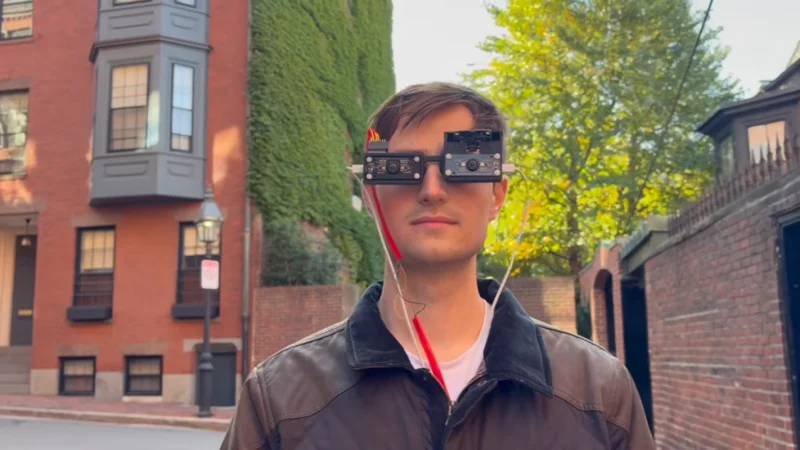
In terms of usability, DebackTech has already been able to walk, ride an electric scooter, and play catch with a slow-moving large ball while wearing the device. The current prototype is somewhat bulky, but in a place as dense with universities as Boston, it probably would not attract much attention; future versions could also be made lighter and more portable.
More than one way to sense
There are many other ways to help visually impaired people, some of which do not even require any technology—for example, humans can also learn echolocation through training.
Project demo video: Inventing the Next Generation of Glasses


Comments
0 comments