Bacterial Computer Solves Math in Parallel
McGill researchers built a microfluidic biocomputer in which live bacteria explore math solutions in parallel.
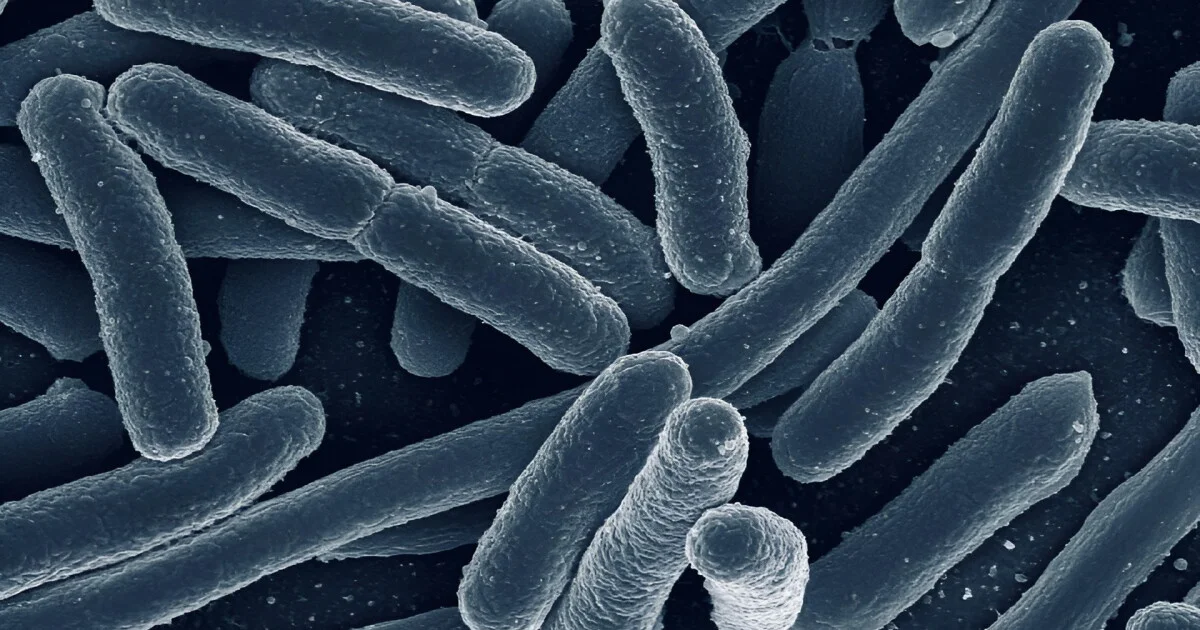
Over the past few millennia, humans went from doing arithmetic with sticks and stones to mechanical calculators, and then to electronic computers that rely on tiny electrical signals to perform billions of operations per second. Now, researchers at McGill University in Canada, working with an international team, are trying a completely different path: using live bacteria to "do math."
What they built is an experimental biological computer. At its core is a microfluidic chip filled with interconnected tiny channels and nodes. Each channel represents a possible mathematical path, and the bacteria swimming through them act as computing agents. Millions of microbes can explore different solutions simultaneously, and they continuously divide and multiply along the way, effectively creating a new batch of "processors" out of thin air.
Turning the subset sum problem into a maze
To demonstrate the system, the team chose the classic "subset sum problem": given 2, 5, 9, and 11, which numbers add up to 16. With four numbers it is easy to exhaust all possibilities, but with 100 numbers, the number of possible combinations reaches an unimaginably astronomical scale.
The researchers "translated" this math problem into a physical channel network. They first made a precisely patterned silicon template, then used it to cast channels from a transparent, oxygen-permeable silicone polymer, PDMS, and finally sealed it against a glass substrate to form a closed micro-maze in which bacteria can swim.
Nodes are logic gates
Special nodes in the network play the role of logic gates. At split nodes, bacteria can choose between two routes, corresponding to "add this number to the sum" or "do not add it." Other nodes let bacteria continue on their original path or merge into a shared channel. The channel layout is designed so that every valid path corresponds to a combination of numbers.
As thousands of bacteria pass through the nodes, they are in effect trying different combinations in parallel. The bacteria of course do not know they are doing computation; they simply move along the physical paths encoded in the chip. At the ends of the channels are outlets representing possible sums. The researchers observe which outlets the bacteria reach and use automated image analysis to track the paths, thereby determining which combinations satisfy the problem.
Multiplying while computing means more processors
The biggest difference between this approach and traditional electronic processors is that the bacteria reproduce naturally. Given suitable conditions, they can produce more "biological processors" during computation, without the need to manufacture or insert additional ones.
"Modern electronic computers use a chip to perform millions of operations per second," said Dan Nicolau, a professor of bioengineering and the study's senior author. "With bacterial division, we effectively have a million chips working at the same time. The more chips there are, the faster the problem is solved, even if each 'processor' performs fewer operations per second."
The team tested Escherichia coli and Vibrio natriegens. The former grows more slowly and served mainly as a reference; the latter can double its population in roughly 9 to 12 minutes under suitable conditions. In one experiment of about 26 minutes, V. natriegens completed two population doublings. The researchers also directly observed bacteria dividing within the channels and measured that more bacteria left the computing network than entered it.
They successfully solved subset sum problems with up to 7 numbers, with a low navigation error rate. For example, E. coli went the wrong way at only 1.3% of straight-through nodes, and V. natriegens at 0.3%. The team also tested larger, specially constructed networks containing up to 200 repeated "1"s. In the 100-value version, the network encoded 2100 possible subsets but produced only 101 distinct sums. This demonstrates more the physical scalability of the network than its ability to solve arbitrary 100-number problems.
The breakthrough is "proliferability," but it is not yet a CPU
Biological computing and massively parallel computing are not entirely new concepts. Previous studies have built similar networks using microscopic media such as molecular motors. The key difference in this system is that bacteria can proliferate during computation, allowing the available computing agents to grow along with the exploration of the problem. The research team describes its goal as using biological proliferation to "defeat the exponential growth of computational demand."
But this does not mean they have built a bacterial version of a modern CPU, nor does it prove that it runs faster than existing electronic computers. The system is still an experimental proof of concept, and claims about speed and efficiency advantages on larger problems come partly from theoretical modeling. There are also many practical challenges: navigation errors, overcrowding of bacteria, nutrient supply, and the extensive work required to build complex microfluidic networks.
Nevertheless, this approach could in the future be used for certain mathematical optimization problems, cryptography, molecular biology, and even some aspects of artificial intelligence.
"Our approach is suited to problems for which electronic computers were not designed, such as mapping protein structures," Nicolau said. "There are reports that AI has already solved this problem, but that is only half true, because AI can only scan existing data. We propose this technology to solve problems, not to make estimates based on past information."
For the next step, the team proposes several directions for improvement: programmable nodes that allow the network logic to change, three-dimensional channels to reduce navigation errors, and engineering to give bacteria better movement and reproduction characteristics. They also need to demonstrate that the system can handle increasingly difficult real-world problems without being overwhelmed by its own growing population.
Source: McGill University; paper: Microsystems & Nanoengineering


Comments
0 comments