870g Solo Shelter: Waterproofing Built Into the Membrane
Alton Walkabout Swag uses a three-layer Nanopore membrane for built-in waterproofing, an 870g body with three poles.
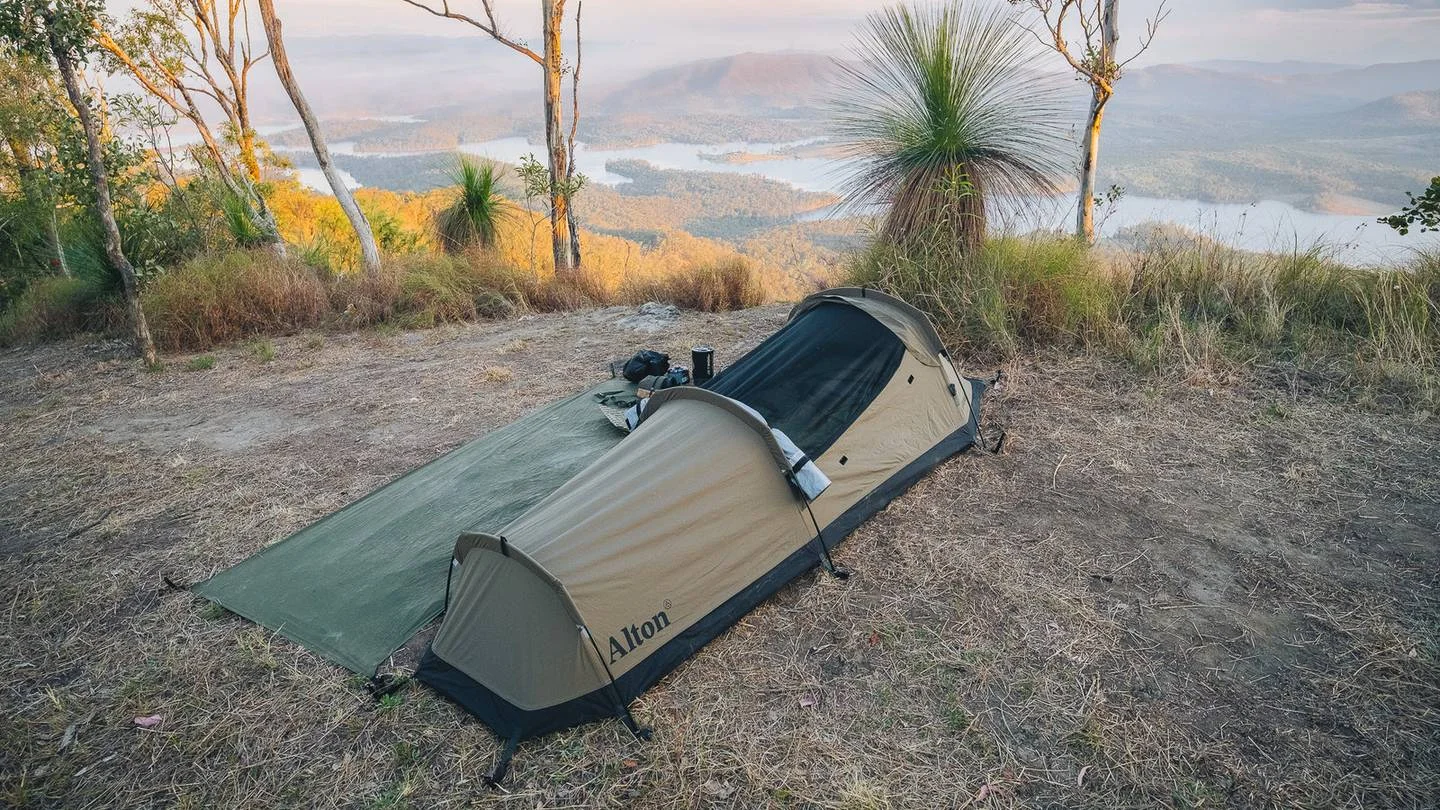
Alton's Walkabout Swag is a one-person shelter that follows the Australian swag tradition in shape, but inside it is no longer the canvas bedroll formula. The body alone weighs 870 grams and is held up by three aluminum poles; it sleeps one person and still leaves room for the backpack it came in.
The traditional swag is a canvas bedroll with a flap: tough, weatherproof, but too heavy for long-distance hiking. Alton, along with explorer and documentary maker Scott Williams and Brisbane design studio Clandestine Design Group, spent nearly three years reworking the form: swapping canvas for a proprietary three-layer fabric and compressing the structure into a low three-pole frame, with one goal—fast setup after a full day of walking, and the ability to stand up to storms.
Nanopore: Waterproofing Lives in the Membrane
The outer fabric is called Nanopore, built around a cold-extruded nanofiber membrane. Its micropores let water vapor through and block liquid water, giving a rated waterproofing of 27,000 mm and breathability of 24,000 g/m²/24h. Most waterproof jackets rely on a DWR coating: water beads up when new, then degrades season by season with wear and washing. For a fully enclosed shelter this small, once the shell wets out, the interior quickly becomes a condensation prison. Nanopore's approach is to build protection into the membrane itself, with no DWR treatment; the fabric is finished with a C0 PFC-free process, and the rated values do not wash out.
Alton stresses that the membrane's manufacturing process uses no toxic chemical solvents. For a tent, the real challenge is controlling condensation in an enclosed space; the three-pole frame keeps the shell taut, sheds heavy rain, and lets air move inside. The official range of conditions runs from downpours and sub-zero cold to humid coastal air, and the low frame is also more stable when wind picks up at night.
The Door Is on Top
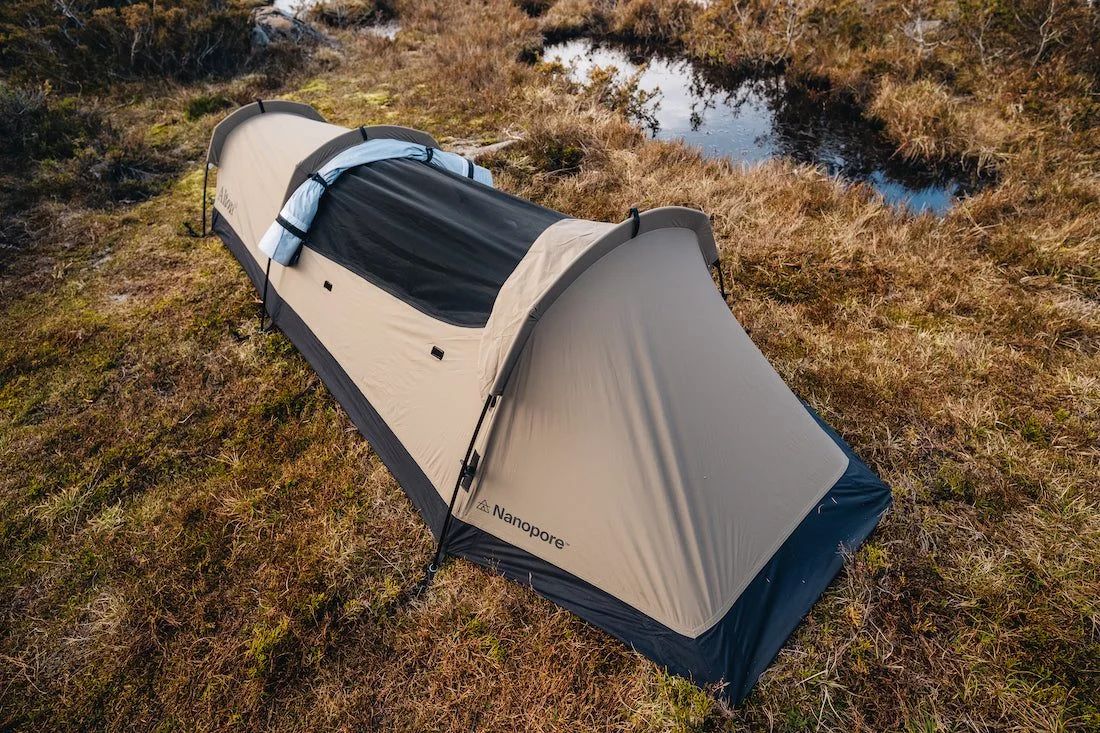
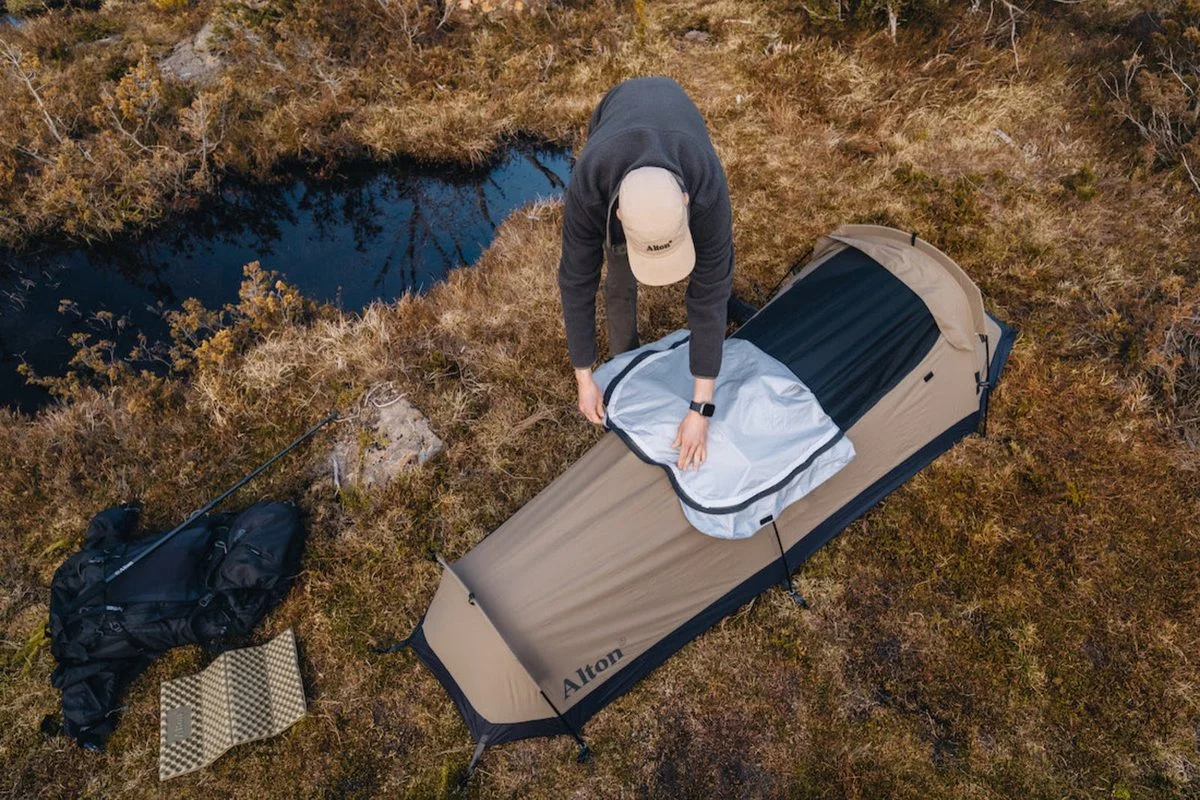
There is no side door and no vestibule. The entry is on top, with the opening oriented so rain slides off rather than pooling in; the zipper has an anti-snag guard so it is less likely to jam when operated with cold hands at night. Pull the whole top lid open and roll it back to sleep under the mesh netting; in worse weather, beneath the mesh there is a pre-sealed-edge ripstop nylon bathtub floor and a Velcro wind block. Setup only requires threading the three poles into the arches, placing ten stakes, and pulling two guy lines.
There is no fly to tension separately, and no sequence of which groundsheet goes down first. The whole process is done by one person. Ten stakes sounds like a lot, but when the wind shifts, every corner needs to be held down.
Dimensions Made for Sleeping and a Backpack
The trade-offs are written directly into the dimensions: 103 inches (about 261.6 cm) long, 40 inches wide at the head, 20.5 inches high, narrowing to 27 inches at the feet. A sleeper can roll over, and a fully loaded backpack can go inside the tent; the cost is that no one will be sitting up straight to read in there. To keep weight down to 870 grams, it does not include a sleeping pad, so the pad's weight counts separately. It is aimed at people on multi-day backpacking trips, not at campground campers unloading gear from a pickup truck bed.
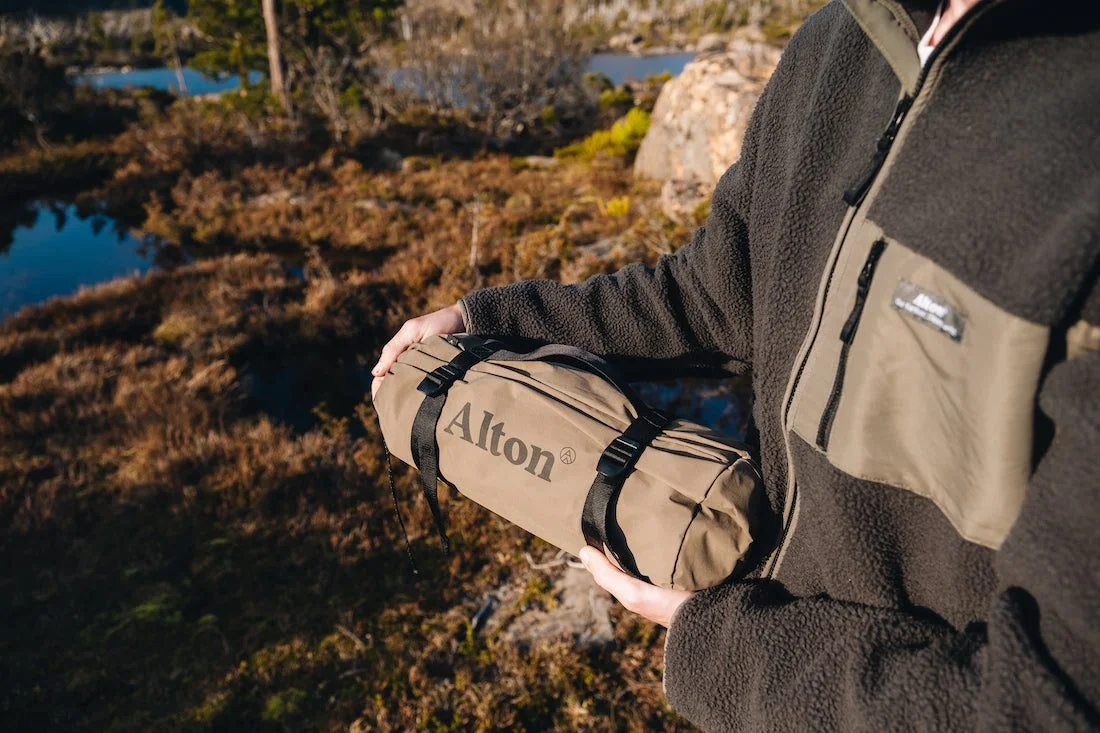
The full kit weighs 3 lb 1.5 oz: three 7.9 mm aluminum poles, two 2-meter Dyneema guy lines (with micro-adjust buckles), and ten 7001 aluminum stakes are all included. Packed down it measures 14 × 5.5 × 5.5 inches, smaller than the 2-liter water bottle Alton uses for comparison, and it fits Alton's Regular, Regular-Wide, and Large sleeping pads. It comes as a complete package with no accessories that must be bought first.
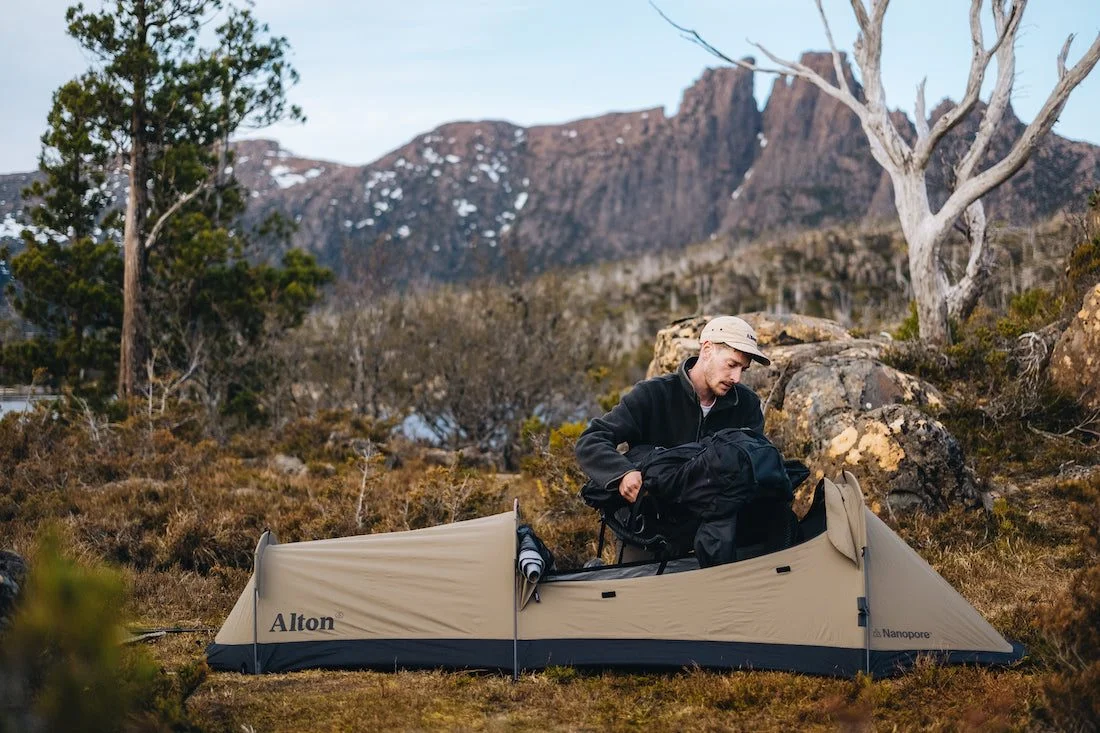
From Film to Gold Award
Williams filmed his journeys for the Scotty's Gone Walkabout channel, and his field experience shaped the pole layout and entry position; Clandestine Design Group completed the design in Brisbane, and the prototype went through multiple rounds of community feedback and field testing before being finalized. The finished product won Gold in the Sports & Lifestyle category at the 2025 Australian Good Design Awards. The awards have run since 1958, with 80 judges from around the world scoring on design, innovation, and impact; Gold is the top five in a category. For hikers who sleep low, move fast, and count every gram, it may be the first swag that truly fits in a backpack.
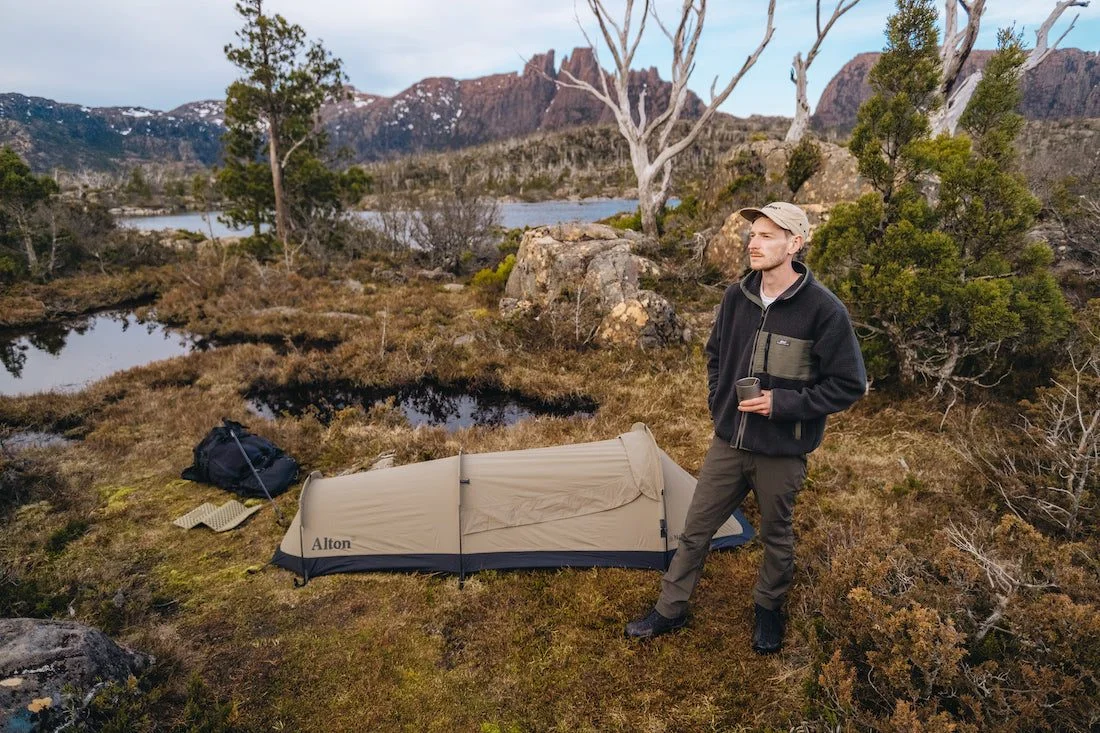
Alton sells direct in a single configuration and offers a lifetime warranty; its product page shows an average rating of 4.8/5 from 45 reviews.
Similar alternative: AquaQuest Hideaway Bivy A single-pole waterproof-breathable bivy sack with a mosquito net, a TPU-coated ripstop nylon shell, about 1 kg, priced at US$199.99.


Comments
0 comments